
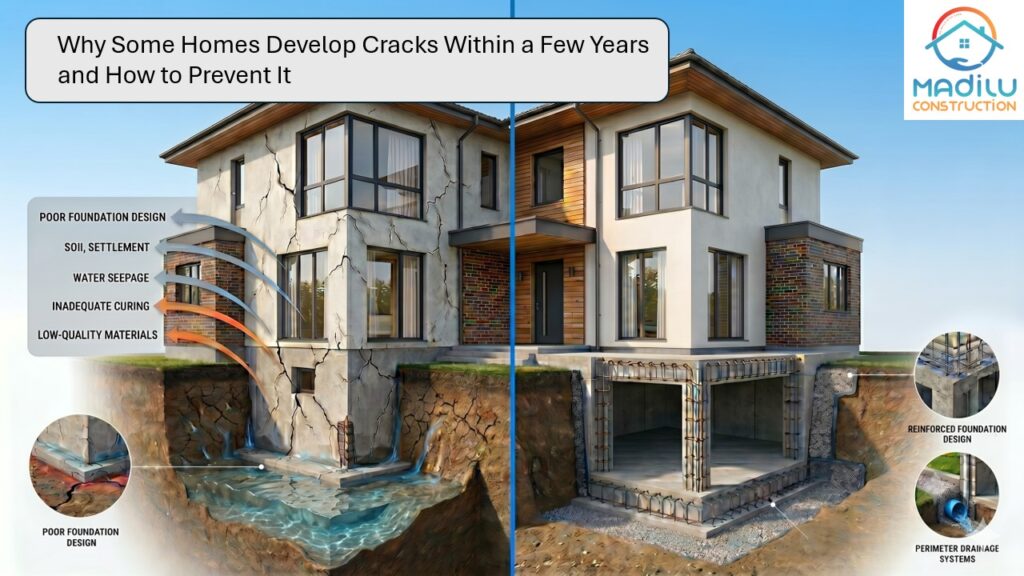
A newly built home is expected to remain strong and visually appealing for many years. However, some homeowners begin noticing cracks in walls, ceilings, or floors within just a few years of construction. While small cracks may seem like a cosmetic issue, they can sometimes indicate deeper structural or construction-related problems.
Understanding why cracks develop and how they can be prevented is essential for maintaining the safety, durability, and value of your home.
Are All Cracks a Cause for Concern?
Not every crack indicates a serious problem. Some minor cracks occur naturally due to material shrinkage or slight settlement during the initial years of a building’s life. However, larger, wider, or continuously growing cracks should never be ignored.
Cracks can generally be classified into:
- Non-structural cracks caused by plaster shrinkage, temperature changes, or minor settlement.
- Structural cracks resulting from foundation issues, poor construction practices, or excessive loading.
Identifying the cause is the first step toward finding the right solution.
Poor Soil Investigation and Foundation Design
One of the most common reasons homes develop cracks is inadequate foundation planning. The foundation supports the entire structure, and if it is not designed according to the soil conditions, uneven settlement can occur.
Common foundation-related causes include:
- Weak or expansive soil
- Inadequate soil testing
- Incorrect foundation depth
- Uneven load distribution
When parts of the foundation settle more than others, stress develops within the structure, leading to cracks in walls and floors.
Prevention:
Conduct a proper soil test before construction and ensure the foundation is designed by qualified structural engineers.
Improper Concrete Mixing and Curing
Concrete gains strength over time through a process called curing. If concrete is not mixed correctly or cured adequately, it may develop shrinkage cracks and lose strength.
Poor construction practices such as:
- Incorrect water-cement ratios
- Low-quality materials
- Insufficient curing periods
can significantly impact the durability of the structure.
Prevention:
Use quality materials, follow recommended mix designs, and ensure proper curing procedures are carried out for the required duration.
Structural Design Deficiencies
A building’s structural design must account for all expected loads, including the weight of the structure, occupants, furniture, and environmental forces.
If columns, beams, or slabs are undersized or poorly designed, stress concentrations may develop over time, resulting in cracks.
Prevention:
Work with experienced structural engineers who can design the building according to applicable standards and future load requirements.
Temperature and Moisture Changes
Building materials naturally expand and contract due to temperature fluctuations and moisture variations. Without proper expansion joints or construction detailing, these movements can cause cracking.
This is particularly common in:
- External walls exposed to sunlight
- Terrace slabs
- Long wall sections
Prevention:
Use appropriate construction joints, waterproofing systems, and quality materials that can accommodate thermal movement.
Water Seepage and Poor Waterproofing
Water is one of the biggest threats to a building’s long-term health. Leaks from roofs, bathrooms, or external walls can weaken materials and contribute to cracking.
Persistent moisture can:
- Corrode steel reinforcement
- Weaken concrete
- Damage plaster and paint
Prevention:
Invest in proper waterproofing during construction rather than waiting for problems to appear later.
Overloading and Unauthorized Modifications
Many homeowners make changes after construction, such as adding floors, removing walls, or installing heavy features that were not considered in the original design.
These modifications can place additional stress on the structure and lead to cracking.
Prevention:
Consult structural professionals before making any major alterations to your home.
Lack of Construction Supervision
Even the best designs can fail if construction quality is not monitored properly. Poor workmanship, incorrect material usage, and deviations from approved drawings often contribute to cracks that appear within a few years.
Prevention:
Ensure professional supervision throughout the construction process to maintain quality standards at every stage.
Building Homes That Last with Madilu Constructions
At Madilu Constructions, we believe that preventing cracks begins long before construction is completed. Through detailed planning, soil testing, quality materials, expert structural design, and strict site supervision, we ensure every home is built for long-term strength and durability. Our commitment to quality construction helps homeowners avoid costly repairs and enjoy peace of mind for years to come. When you choose Madilu Constructions, you choose a home built on a foundation of reliability, precision, and lasting value.