
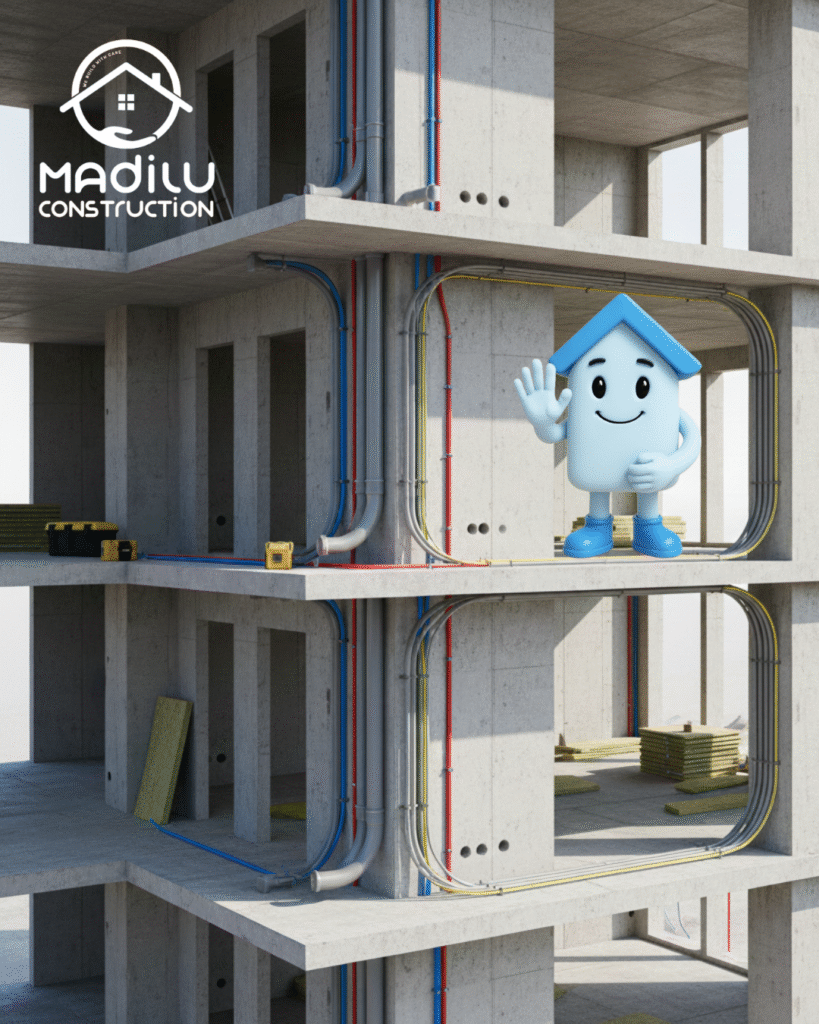
How Structural Planning Impacts Plumbing & Electrical Fittings
When building a home, structural planning is often viewed as something that only concerns foundations, columns, and beams. However, the impact of structural planning goes far beyond the skeleton of a building. It plays a crucial role in how efficiently plumbing and electrical systems are designed, installed, and maintained. Poor coordination between structure and services can lead to frequent repairs, higher costs, and long-term inconvenience for homeowners.
Understanding this connection helps ensure a home that is both structurally strong and functionally efficient.
The Role of Structural Planning in Home Construction
Structural planning defines the layout of columns, beams, slabs, and load-bearing walls. These elements determine how space is used and how services such as water supply, drainage, wiring, and switch points are routed through the building.
When plumbing and electrical layouts are considered only after the structure is finalized, conflicts often arise. Pipes may clash with beams, electrical conduits may need unnecessary bends, and slabs may be cut to accommodate late changes. Proper planning avoids these issues from the start.
Plumbing Efficiency Depends on Structural Layout
Plumbing systems require precise alignment for smooth water flow and effective drainage. Structural planning directly influences where toilets, kitchens, and utility areas can be positioned.
Key impacts include:
- Shaft Planning: Vertical plumbing shafts must be planned alongside columns and walls to allow uninterrupted water supply and drainage across floors.
- Slab Thickness and Slopes: Proper slab design ensures correct slopes for drainage pipes, preventing water stagnation and leakage.
- Avoiding Beam Conflicts: If beams are not coordinated with pipe routes, plumbers may cut into structural members, weakening the building.
When plumbing is integrated into structural planning, maintenance becomes easier and long-term leakage issues are significantly reduced.
Electrical Layouts and Structural Coordination
Electrical systems rely on concealed conduits running through walls and slabs. Structural planning ensures that these conduits can be placed without compromising safety or aesthetics.
Structural coordination benefits electrical fittings in several ways:
- Switch and Socket Placement: Proper wall alignment ensures switches and sockets are positioned conveniently without clashing with columns.
- Conduit Routing: Planned conduit paths reduce sharp bends, making wiring safer and easier to replace if needed.
- Load Distribution: Structural design considers areas with higher electrical loads, such as kitchens or home offices, allowing adequate space for wiring and panels.
Without this coordination, electricians may resort to surface wiring or unnecessary drilling, affecting both appearance and safety.
Preventing Structural Damage and Rework
One of the biggest risks of poor planning is structural damage caused during service installation. Cutting beams or slabs to fit pipes and conduits can compromise the building’s strength.
Integrated planning ensures:
- No hacking of load-bearing elements
- Reduced rework and material wastage
- Faster construction timelines
This not only protects the structure but also keeps costs under control.
Enhancing Safety and Long-Term Performance
Electrical and plumbing failures often stem from poor initial planning. Water seepage can damage electrical wiring, while overloaded circuits can pose fire risks.
With proper structural coordination:
- Wet areas are clearly separated from electrical zones
- Wiring is protected within designated conduits
- Plumbing lines are accessible for future repairs
This results in safer homes with fewer maintenance issues over time.
Cost Efficiency Through Early Planning
When structural, plumbing, and electrical plans are aligned early, it reduces last-minute changes and avoids expensive corrections. Builders can estimate material quantities accurately, minimize wastage, and execute work efficiently.
For homeowners, this means better budget control and improved quality without hidden costs.
Closing from Madilu Constructions
At Madilu Constructions, we believe that strong homes are built through smart planning. Our approach integrates structural design with plumbing and electrical layouts from the very beginning, ensuring efficiency, safety, and long-term reliability. By coordinating every detail before construction starts, we deliver homes that are not only structurally sound but also thoughtfully engineered for everyday living. When you build with Madilu Constructions, you build with clarity, quality, and confidence.