
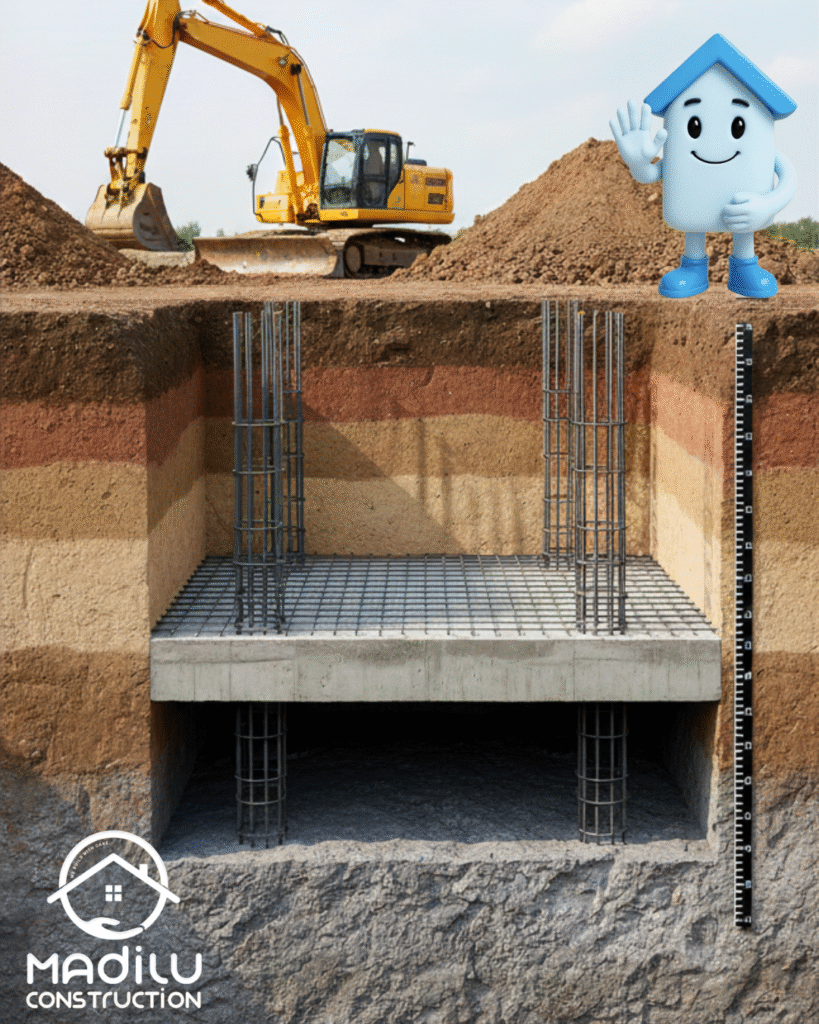
How Deep Should a Foundation Be? The Real Answer Depends on This
One of the most common questions homeowners ask before starting construction is, “How deep should my foundation be?” While it may seem like a simple question, the real answer is far more complex. There is no one – size – fits – all depth for a foundation. The ideal depth depends on several critical factors that directly affect the safety, stability, and lifespan of your home.
Understanding these factors helps homeowners make informed decisions and avoid costly structural problems in the future.
Why Foundation Depth Matters
The foundation carries the entire load of a building and transfers it safely to the ground. If the foundation is too shallow, it can lead to uneven settlement, cracks in walls, water seepage, or even structural failure over time. If it is deeper than required, it may unnecessarily increase construction costs.
The goal is to achieve the right depth – deep enough to ensure stability, but efficient enough to remain economical.
Soil Type: The Most Important Factor
Soil condition is the primary factor that determines foundation depth. Different soils have different load – bearing capacities.
- Hard rock or dense gravel: Requires relatively shallow foundations due to high bearing strength.
- Red soil or sandy soil: Needs moderate depth to ensure stability.
- Clay or black cotton soil: Requires deeper foundations to prevent swelling and shrinkage – related movement.
Before construction begins, a soil test helps determine how much load the ground can safely support. Skipping this step can result in long – term structural damage.
Type of Building and Load
The number of floors and overall building design significantly impact foundation depth.
- A single – floor house requires less depth compared to a G+2 or G+3 structure.
- Buildings with heavy loads, such as those with RCC slabs, require deeper foundations.
- Future expansion plans must also be considered to avoid rework later.
A foundation designed only for present needs may fail when additional floors are added.
Groundwater Level and Drainage
High groundwater levels can weaken soil strength and affect foundation stability. In areas where water tables are high, foundations often need to be deeper and properly waterproofed.
Poor drainage around the foundation can cause erosion, waterlogging, and loss of bearing capacity. Proper planning ensures that foundation depth works in harmony with drainage systems.
Local Climate and Environmental Conditions
Climate also plays a role in determining foundation depth. Seasonal moisture changes can cause soil expansion or contraction, especially in clay – rich areas. A deeper foundation helps protect against these movements, reducing cracks and settlement issues.
In urban areas like Bangalore, nearby construction activity can also affect soil stability, making proper depth even more critical.
Building Codes and Structural Design
Local building codes and engineering standards provide guidelines for minimum foundation depths. However, these are starting points, not fixed rules. Structural engineers adjust depth based on actual site conditions, soil reports, and load calculations.
A professionally designed foundation considers:
- Soil bearing capacity
- Structural load distribution
- Safety margins
- Long – term durability
Why Guesswork Can Be Dangerous
Assuming a standard foundation depth without proper analysis can lead to serious problems. Shallow foundations may save money initially but often result in expensive repairs later. On the other hand, overbuilding without justification wastes resources.
The safest approach is to rely on technical evaluation rather than assumptions or common practices.
Closing from Madilu Constructions
At Madilu Constructions, we believe strong homes begin with well – engineered foundations. We never rely on guesswork. Every project starts with soil testing, structural analysis, and expert planning to determine the right foundation depth for long – term stability and safety. By building from the ground up with precision and care, we ensure that your home stands strong for generations to come. When you build with Madilu Constructions, you build on a foundation you can truly trust.